




Blog > Cx excellence
Mother’s Day eCommerce 2026: How to scale your CX team for the online surge
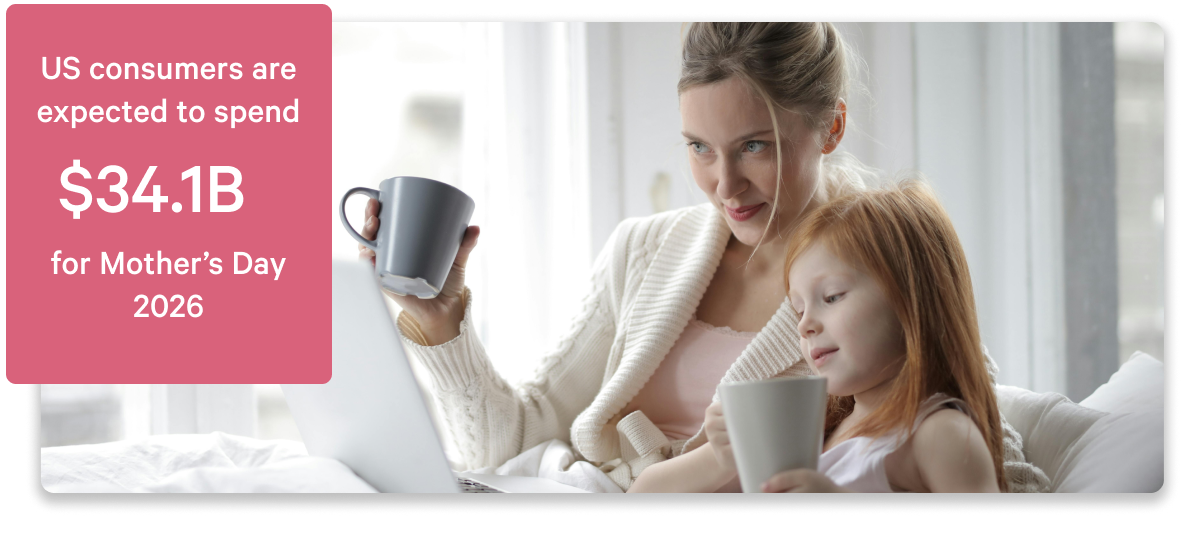
Mother's Day is one of the biggest retail events of the year, and 2026 is shaping up to be another record-chaser. According to the latest survey from the National Retail Federation and Prosper Insights & Analytics, U.S. consumers are expected to spend $34.1 billion this Mother's Day, up from $33.5 billion in 2025. The average person celebrating plans to spend $259 on gifts and experiences, another near-record figure.
And the opportunity isn't just domestic. In the UK, Mother's Day retail spend is forecast to hit £18 billion in 2026, representing 15% year-on-year growth. Across North America, Europe, and beyond, consumers are spending more, shopping earlier, and increasingly purchasing online. For eCommerce brands, the stakes have never been higher, and neither has the pressure on your customer experience (CX) team.
Here's what's changed in 2026, why it matters, and exactly how to scale your support operation for the surge.
What's different about Mother's Day 2026
A few things have shifted since last year that every eCommerce brand needs to account for.
Social commerce and AI-assisted discovery are reshaping how people shop. Research from Savvy found that 52% of UK shoppers spotted Mother's Day gift ideas on social media, with TikTok and Instagram Reels influencing 34% of purchases overall. Among households with young children, that figure jumps to 57%. Perhaps more significantly: one in three shoppers now expect to use an AI tool like ChatGPT or Gemini for gift inspiration, rising to 60% among younger families. Customers are arriving at your site better researched, faster, and with higher expectations than ever.
Personalization has moved from a nice-to-have to a baseline expectation. The same survey from Savvy showed shoppers increasingly want gifts that feel unique or create a special memory; 48% and 43% respectively, both up from prior years. Personalized gifts are on the radar for 58% of UK shoppers this year. Brands that can deliver personalized product recommendations and tailored support interactions are at a significant advantage.
The online channel remains dominant. eCommerce continues to be the most popular shopping destination for Mother's Day purchases, driven by convenience, broader selection, and increasingly fast delivery. For fashion and beauty brands in particular, two of the biggest gift categories, the shift online puts CX teams right in the critical path of conversion and retention. (More on fashion and beauty CX below.)
The AI shift in customer experience
The biggest structural change in CX going into 2026 is the rapid rise of AI agents in customer support. According to Salesforce, 30% of service cases were resolved by AI in 2025, and that figure is expected to hit 50% by 2027. Gartner predicts AI integration could cut contact center labor costs by $80 billion globally.
But the story isn't simply that AI is replacing human agents. It's more nuanced and more important to get right.
A 2025 Zendesk study found that 88% of customers now expect faster responses than they did just a year ago, and 74% expect support to be available 24/7. AI agents are well-positioned to meet those baseline expectations: they don't sleep, don't queue, and can handle surges in volume without breaking a sweat. The average cost of an AI interaction is $0.50, compared to $6.00 for a human agent, a 12x difference that adds up fast during a Mother's Day spike.
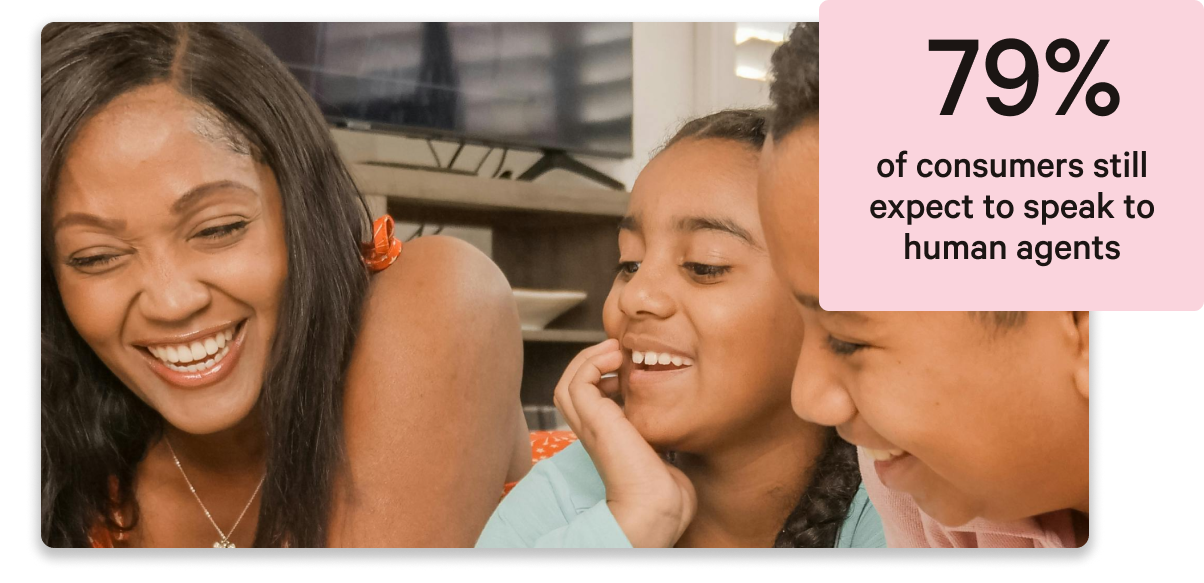
At the same time, consumer sentiment remains cautious. A 2025 SurveyMonkey study found that 79% of Americans still prefer interacting with a human agent, especially for emotionally charged or complex interactions. For a gift-buying occasion like Mother's Day, where purchases are personal and delivery timing is critical, that human preference matters.
The practical implication for scaling CX in 2026 is this: use AI to absorb volume, use humans to build loyalty. AI handles the routine (order status, delivery windows, return policies). Skilled agents handle the moments that matter: a damaged gift that arrived too late, a personalization error, an anxious customer worried their flowers won't arrive in time.
Brands that get this balance right will see higher CSAT and lower operational costs. Those that lean too hard on automation without a clear escalation path will frustrate exactly the customers they most need to retain.
5 strategies to scale CX for Mother's Day 2026
1. Start planning now. Demand forecasting has to come first
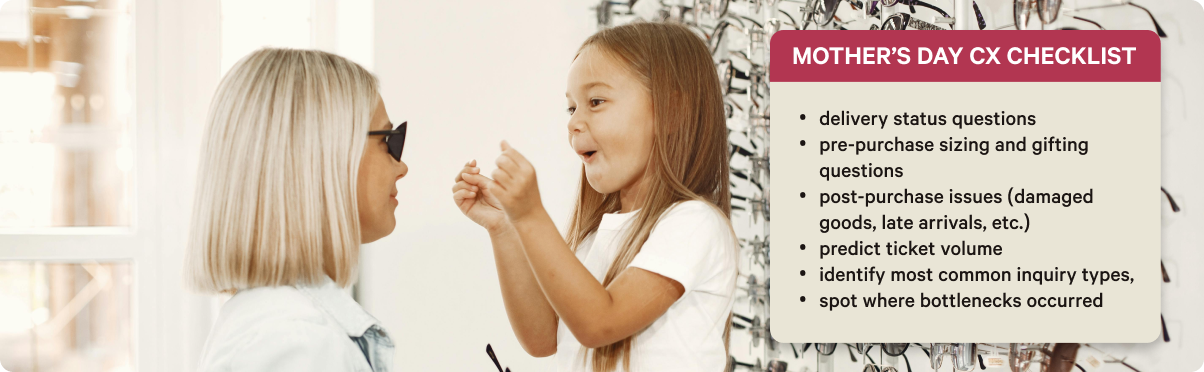
The brands that handle peak season best start preparing weeks ahead. Use data from previous Mother's Day campaigns to predict ticket volume, identify the most common inquiry types, and spot where bottlenecks occurred. Common Mother's Day spikes include: delivery status questions in the final 5 days before the holiday, pre-purchase sizing and gifting questions (especially for fashion and beauty), and post-purchase issues around damaged goods or late arrivals.
At Influx, we've seen early preparation translate directly into results. Tipsy Elves, for example, proactively scaled their support 5x ahead of peak season, achieving a 92% CSAT score, zero transfers, and a 6-hour first response time on email. Planning ahead gives you the runway to do this right.
2. Invest in pre-sales support to boost conversions
Most CX teams focus on post-purchase support. But Mother's Day is a gifting event, which means shoppers have lots of questions before they buy: about sizing, delivery timelines, gift packaging, return policies, and personalization options. This is especially true in fashion and beauty, where product complexity is high and the stakes of getting it wrong feel personal.
Proactive pre-sales support, available via live chat or messaging, not only drives conversions but reduces post-purchase inquiry volume. When shoppers get clear answers before buying, fewer things go wrong afterward.
For fashion brands navigating omnichannel shoppers, this is particularly important. Customers might discover a gift on Instagram, check sizing via live chat, and then complete the purchase through email or in-store. Building a support system that spans all of those touchpoints is what separates brands that close the sale from those that lose the shopper at the final step.
3. Deploy AI for volume strategically
If you haven't implemented conversational AI for routine inquiries, Mother's Day 2026 is a compelling forcing function. AI agents can handle the high-volume, low-complexity inquiries that flood support queues during peak periods, freeing your human team for the interactions that require empathy, judgment, and brand knowledge.
But implementation matters. Poorly designed bots that fail to resolve issues, or that block customers from reaching a human, actively damage CX rather than improving it. Deloitte's contact center research found that while AI adoption jumped significantly between 2023 and 2025, CX scores dropped in cases where bots lacked contextual intelligence.
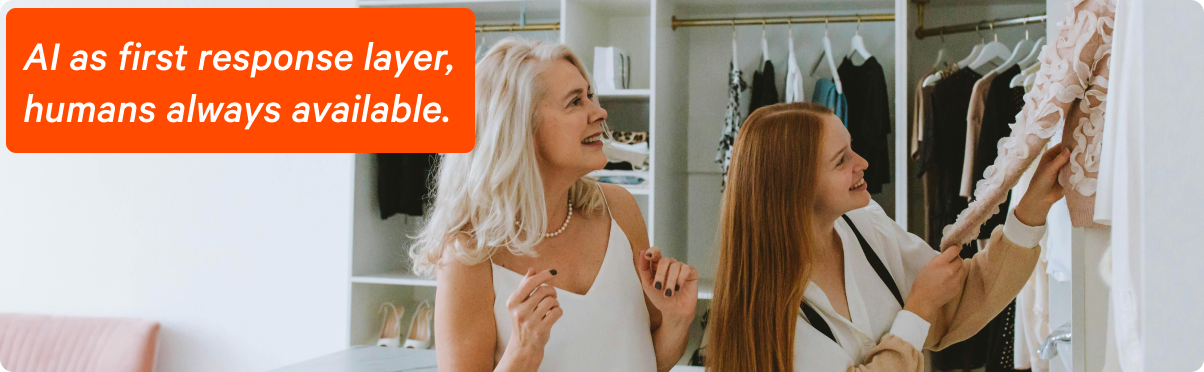
The design principle that works: AI first, human always available. Set up smooth escalation paths. Measure deflection with delight, not deflection alone. Track AI CSAT separately from human CSAT so you can see where the gaps are.
4. Scale your team fast without sacrificing quality
There's no slower way to scale than in-house seasonal hiring. Recruiting, onboarding, and training new agents in the weeks before a major retail event is expensive, unpredictable, and often results in quality dips exactly when it matters most.
The alternative is working with a scalable CX partner which gives you access to a pre-trained, managed team that can grow with your demand curve.
Bearpaw, for example, used Influx to handle 2x seasonal spikes across email, live chat, and voice, maintaining 91% CSAT throughout.
Meshki, a global fashion retailer processing over 25,000 customer conversations per month, partnered with Influx to achieve an 85% reduction in internal support workload while maintaining 90%+ CSAT on email.
For beauty brands in particular, this kind of scalable support is now the norm. Traffic spikes around launches, influencer moments, and seasonal promotions are notoriously hard to predict. Omnichannel CX for beauty requires advisors who understand products deeply enough to guide shade matching, ingredient questions, and routine-building across chat, social, email, and phone, all simultaneously. That's not something you can staff up for in two weeks.
5. Keep brand voice consistent across every channel
Mother's Day shoppers are emotionally invested in getting the gift right. They're often anxious, indecisive, and eager for reassurance. The tone of your support interactions (whether through chat, social DM, email, or phone) shapes how they feel about your brand long after the holiday.
The brands that get this right treat brand voice as a system, not a slogan. Reformation's internal "Customer Love" team is a classic example: every agent, across every channel, is trained on the same voice guidelines, resulting in a seamless experience whether a customer is talking to marketing, a store associate, or a support agent. Customers engaging through this coordinated approach show higher rates of becoming repeat, high-value shoppers.
For Influx partners, this is built into how we work. We document your brand voice, train agents on it, and QA against it continuously. The goal is that a customer who chatted with your team on Instagram last week gets the exact same experience when they email about a delivery issue this week.
Don't forget: Post-Mother's Day support
The work doesn't end on the second Sunday of May. The days following Mother's Day bring a wave of returns, gift satisfaction questions, and delivery issue escalations. For fashion and beauty brands, return rates can run between 30-40%, and the way you handle a return almost always determines whether that customer shops with you again.
Build a dedicated post-sale plan. Staff for it. Brief your agents on empathetic resolution. And treat every post-purchase interaction as an opportunity to strengthen the relationship, not just close a ticket.
Get started with Influx
Influx was established in 2013 & has been trusted by 750+ brands globally, ranging from startup to scale.
Influx builds 24/7, near-shore global customer support teams. We provide fully managed, flexible & high-performance agents. Our services range from eCommerce support, tech support, sales support, AI Management, Enterprise solutions and more to give you the customer assistance you need to prioritize other responsibilities and continue scaling your business.
Make your support operations fast, flexible, and ready for anything with experienced, 24/7 support teams working on demand. See how brands work with Influx to deliver exceptional customer support or get a quote now.



 6 Circle - small.png)