



Blog > Cx excellence
How leading fashion brands build customer experience that scales
Fashion shoppers don’t follow a straight line. They discover a brand on Instagram, check reviews on Google, send a DM asking about sizing, then come back two days later to buy after seeing an email. Every one of those touchpoints shapes how they feel about the brand.
That makes fashion one of the most demanding categories for customer experience (CX). Returns are high, volume is unpredictable, and customers expect fast, on-brand support wherever they show up. A generic response or a slow reply can cost you the sale and the relationship.
The brands performing best have figured out how to keep their support consistent, flexible, and distinctly them, whether they're scaling a team for the first time or rebuilding one that stopped working. Here’s what they’re doing well and the practical lessons any growing fashion brand can apply.

The pressures that make fashion CX so hard to get right
Fashion brings a specific mix of pressures that most other eCommerce categories don’t face at the same intensity.
Purchases are personal. Customers are choosing how they want to show up in the world, and when something goes wrong with an order, it feels personal too. Support teams need to match that emotional weight with real product knowledge and empathy.
Return rates in online fashion sit between 30-40%, well above most retail categories. The way a brand handles a return often determines whether that customer shops again. Every exchange is a chance to strengthen the relationship or lose it.
Volume is hard to predict. New drops, influencer moments, seasonal peaks, and flash sales all create sudden spikes that fixed-sized support teams struggle to absorb. And customers now expect to reach you across email, live chat, Instagram DMs, and TikTok, all with the same level of quality and brand voice.
And when support teams are managed without clear structure or agency oversight, quality drifts. Agents fall back on scripts, de-escalation suffers, and CX managers end up micromanaging instead of building systems. That's a common situation for fast-growing fashion brands that scaled their teams quickly but didn't have the infrastructure to match.
Agents fall back on scripts, de-escalation suffers, and CX managers end up micromanaging instead of building systems.
Growing fashion brands usually know what great CX should look like. The hard part is building the operational foundation to deliver it while the rest of the business is evolving just as fast.
3 fashion brands that are getting it right
ASOS: Reducing friction before customers need to ask
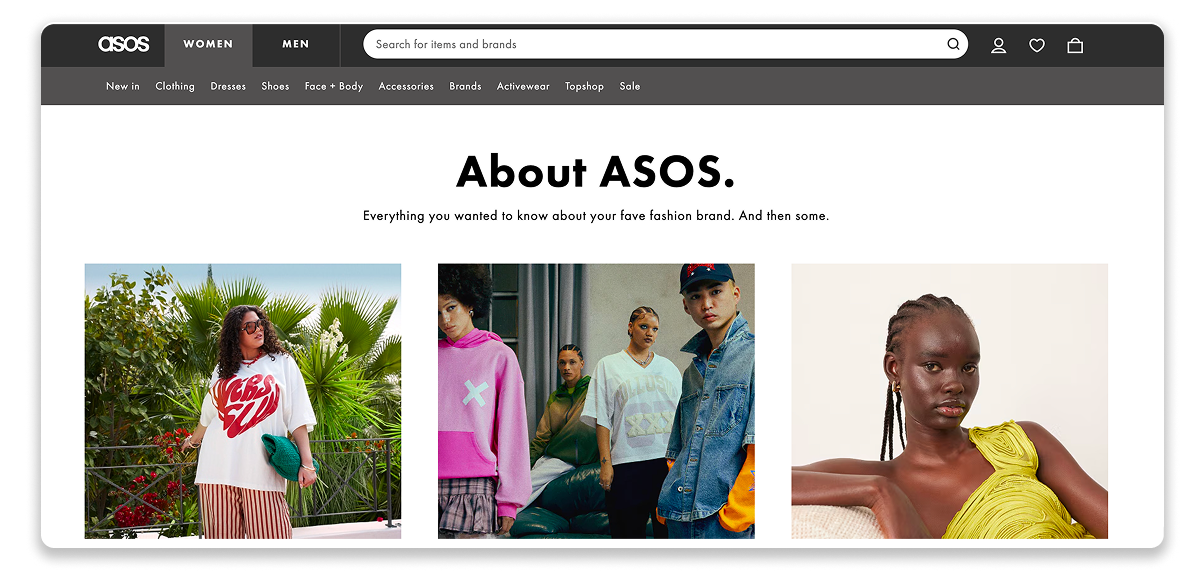
ASOS serves over 24 million active customers across more than 200 markets, carrying 850+ brands. At that scale, the support strategy has to start before a customer ever opens a support ticket.
Their approach leans heavily on self-service. Detailed order tracking, easy returns, and AI-powered product recommendations handle the routine questions and reduce the volume of tickets that need a human response.
ASOS maintains over 50 million customer profiles to personalize the experience across email, push notifications, and in-app messaging.
They’ve also invested in AI-driven support agents to improve response speed and consistency. And their interactive shopping feature, ASOS Live, has driven strong engagement, with the vast majority of views happening on replay. On-demand content like this helps customers make confident buying decisions, which means fewer post-purchase support tickets.
Takeaway: The best way to scale support is to reduce the need for it. Self-service and smart content handle routine questions so your team can focus on the conversations that actually require a human.
Reformation: Making brand voice a system, not a slogan
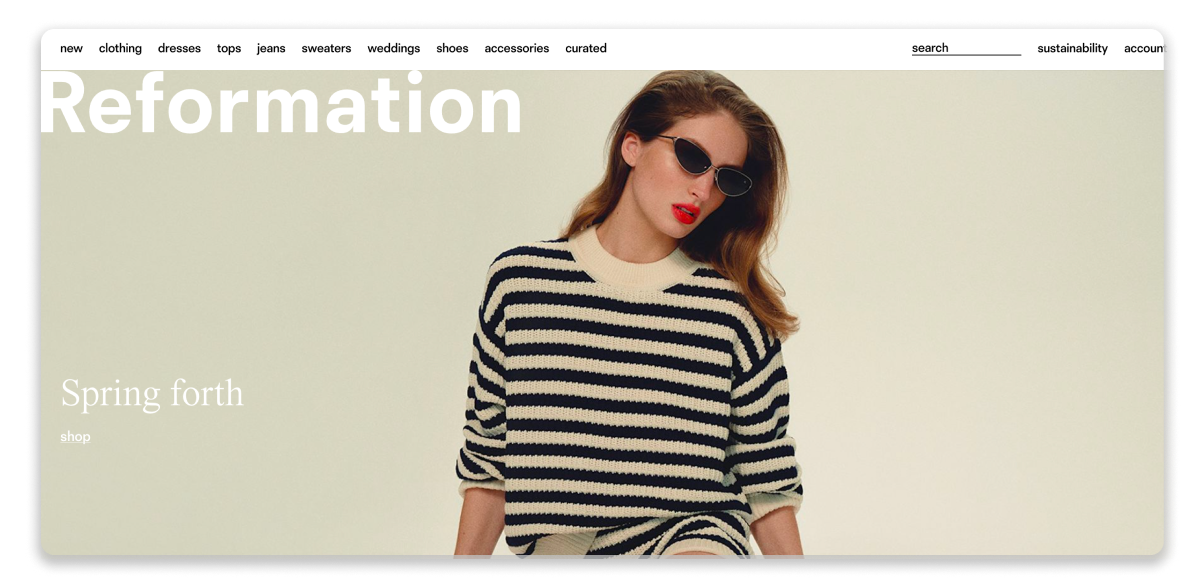
Reformation’s tone is a core part of its identity: direct, a little irreverent, unmistakably on-brand. What stands out is how deliberately they’ve carried that voice into customer support.
Their support team, known internally as “Customer Love,” coordinates across eCommerce, in-store, and service channels using a shared customer platform. Whether someone interacts with marketing, a store associate, or a support agent, the experience feels like one conversation.
Their Senior Director of Customer Strategy has described the goal simply: customers see Reformation as one brand, not separate retail and eCommerce experiences.
Reformation segments its outbound communications into three buckets: individualized messages from store teams, one-off campaigns, and automated flows. All three follow the same voice guidelines. Customers who engage through this coordinated approach have shown higher rates of becoming repeat, high-value shoppers.
Takeaway: Brand voice in support needs to be trained and reinforced, across every agent, channel, and shift. The payoff shows up directly in retention and repeat purchase rates.
Meshki: Scaling global support without losing quality
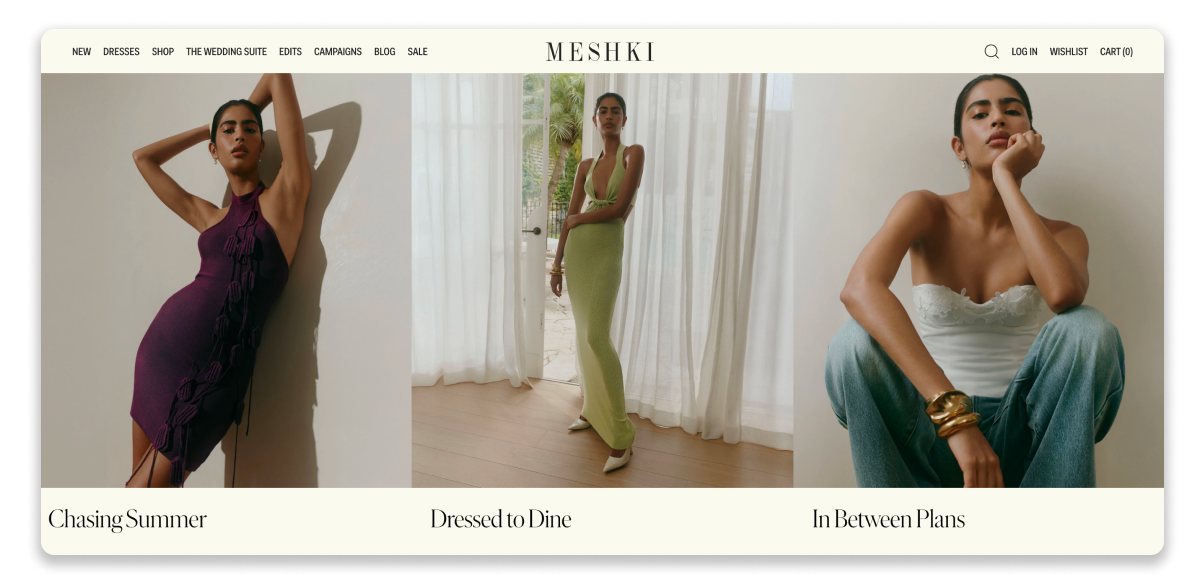
Meshki started as an Instagram brand in Sydney and has grown into a global fashion retailer shipping to over 190 countries. With that kind of growth comes a support challenge: over 25,000 customer conversations per month, spread across time zones, in a brand where tone and quality matter deeply.
Rather than building a massive internal team, Meshki partnered with Influx to manage tier 1 support as an extension of their existing operation. The result was an 85% reduction in internal support workload while maintaining 90%+ CSAT on email tickets. Influx handles the volume, and Meshki’s internal team focuses on complex issues, escalations, and growth.
The consistency comes from how the team is built. Influx agents are trained on Meshki’s brand voice, products, and processes so customers experience the same quality regardless of who they’re speaking with. Ongoing QA and a dedicated management layer keep standards in place as the operation scales.
Takeaway: Growth creates support volume that’s hard to staff internally, especially across time zones. A managed partner that genuinely understands your brand can absorb that volume without compromising quality.
The operational basics that hold it all together
Great fashion CX runs on operations. Tools help, but consistent results come from the systems behind them.
The brands doing this well tend to share a few things. Agents have access to customer context: past orders, previous conversations, preferences. Staffing flexes around product drops, seasonal peaks, and campaign moments.
Product training covers sizing, materials, and styling so agents can guide real purchasing decisions. Support runs across email, chat, social, and phone. And quality checks happen continuously so tone and accuracy stay aligned with the brand.
Most of this sounds obvious. But many growing fashion brands inherit CX teams and processes that were set up quickly and never properly rebuilt. Building these foundations while the rest of the business is moving fast is where most brands get stuck.
How Influx helps fashion brands scale CX
Influx provides managed support teams for fashion and eCommerce brands. We focus on consistent, high-quality service across every channel without adding hiring or operational overhead to your team.
Here's how we support fashion brands:
- We build and manage your support team, including hiring, training, scheduling, and QA.
- We document your brand voice so agents stay consistent across shifts and channels.
- Our coverage scales during product launches, drops, BFCM, and seasonal peaks.
- We handle email, chat, social, SMS, and phone within one managed operation.
- Our pricing is month-to-month with no lock-in, so you can plan support around how your business actually moves.
You stay focused on product, brand, and growth. We manage the day-to-day work of helping your customers feel supported.
FAQs
How do you train agents on our brand voice?
We start with your brand guidelines, product catalog, and existing support workflows. From there, we build training documentation specific to your brand and run ongoing QA to make sure tone, accuracy, and quality stay consistent. Because the same agents work with your brand every day, they get sharper over time.
What happens when volume spikes during a launch or peak season?
We add trained agents, extend hours, or increase coverage during high-demand windows. Because plans are month-to-month, you can scale up for BFCM or a new drop and scale back down after without being locked into long-term headcount.
Which support channels can you cover?
Email, live chat, social, SMS, and phone, all within one managed operation.
How fast can a team be up and running?
Most teams launch within one week. You can start with one or two agents and add more as your needs grow.
Get started with Influx
Influx was established in 2013 & has been trusted by 750+ brands globally, ranging from startup to scale.
Influx builds 24/7, near-shore global customer support teams. We provide fully managed, flexible & high-performance agents. Our services range from eCommerce support, tech support, sales support, AI Management, Enterprise solutions and more to give you the customer assistance you need to prioritize other responsibilities and continue scaling your business.
Make your support operations fast, flexible, and ready for anything with experienced, 24/7 support teams working on demand. See how brands work with Influx to deliver exceptional customer support or get a quote now.




 6 Circle - small.png)